Canada's plan sets student arrivals at 150,000 a year
Canada's 2027–2029 Immigration Levels Plan, released on Nov. 5, 2026, holds the target for new international-student arrivals at 150,000 a year in 2027, 2028 and 2029, Immigration, Refugees and Citizenship Canada said. In a Reuters dispatch published Wednesday, university officials said the study-permit caps had damaged Canada's reputation and may undercut efforts to attract research talent.
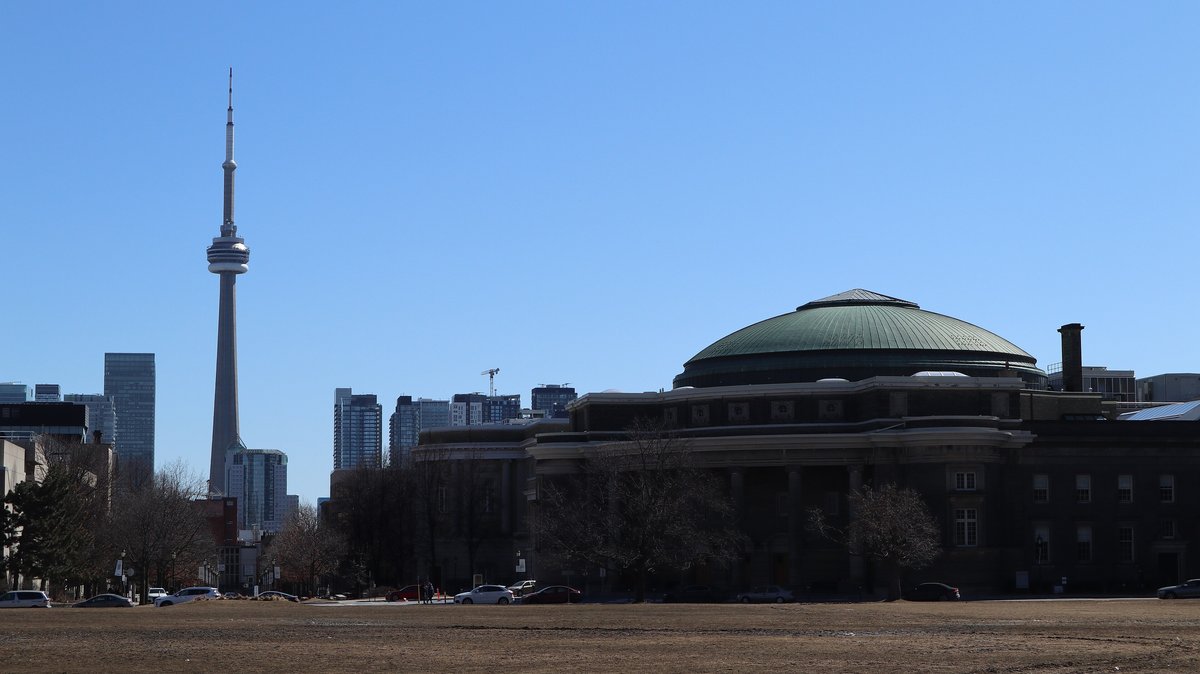
This image is believed to be available for open use. Credit: Maksim Sokolov (maxergon.com) / Wikimedia Commons. If you are the rights holder and object, contact us and we'll remove it.
As of 2:45 p.m. ET, Wednesday, Nov. 25, 2026
Canada will aim to admit up to 150,000 new international students a year in 2027, 2028 and 2029, Immigration, Refugees and Citizenship Canada said in its 2027–2029 Immigration Levels Plan, which the department said was released on Nov. 5, 2026. University officials told Reuters in a dispatch published Wednesday that the study-permit caps had tarnished Canada's brand and may undercut efforts to attract research talent.
The plan stabilizes targets for new temporary-resident arrivals at 370,000 a year, IRCC said. The department's backgrounder said that total includes 220,000 new workers and up to 150,000 new international students in each of the three years. A supplementary table published with the plan lists a students target of 150,000 in each year, 170,000 arrivals under the International Mobility Program and 50,000 under the Temporary Foreign Worker Program. The overall temporary-resident target is given as 370,000, with a range of 355,000 to 385,000. Those figures are for new arrivals, the table's notes say, and do not set targets for permit extensions or for study- or work-permit applications filed from inside Canada.
| Category, as labeled by IRCC | 2027 | 2028 | 2029 |
|---|---|---|---|
| Overall arrivals (range) | 370,000 (355,000–385,000) | 370,000 (355,000–385,000) | 370,000 (355,000–385,000) |
| International Mobility Program | 170,000 | 170,000 | 170,000 |
| Temporary Foreign Worker Program | 50,000 | 50,000 | 50,000 |
| Students | 150,000 | 150,000 | 150,000 |
Table: GROKsiNEWS.com. Figures are IRCC's published targets for new arrivals. The accompanying backgrounder describes the student figure as "up to 150,000." IRCC said workers are expected to represent approximately 60% of new arrivals over the course of the plan, and students approximately 40%. Permanent-resident admissions are set separately at 380,000 a year.
The plan also stabilizes permanent-resident admissions at 380,000 a year, with economic-class admissions maintained at more than 64% of the total, the backgrounder said; the supplementary tables give the economic share as 64.4% across all three years. IRCC said the targets support a government commitment to reduce the temporary-resident population and to keep permanent-resident admissions at less than 1% of Canada's total population beyond 2027, "to allow our housing and services to catch up."
Reuters, in a bylined dispatch carried in full by The Globe and Mail and BNN Bloomberg, said the 150,000-a-year target was down sharply from 292,830 new arrivals in 2024. That 2024 figure is Reuters' and is not stated in the IRCC plan pages reviewed for this article.
Joseph Wong, vice-president international at the University of Toronto, told Reuters: "These study permit caps really tarnished Canada's brand." He said the caps "gave the impression that Canada was closing its doors to international students." Wong has travelled to India three times in the last two years on recruiting trips, Reuters reported, and said of his latest trip: "The challenge is actually conveying to prospective Indian students that our door is open."
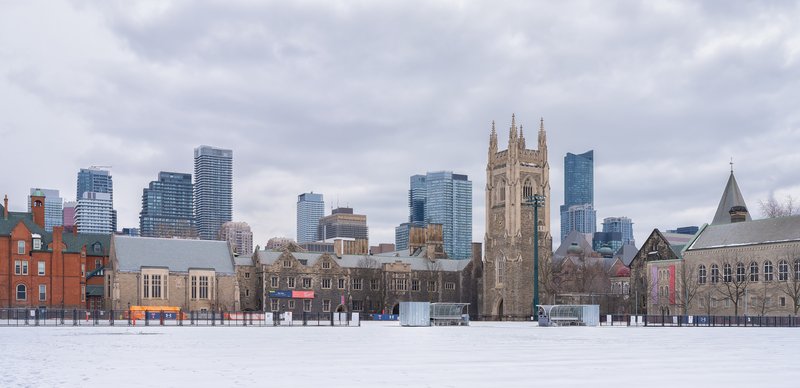
This image is believed to be available for open use. Credit: Maksim Sokolov (Maxergon) / Wikimedia Commons. If you are the rights holder and object, contact us and we'll remove it.
Robert Asselin, chief executive of the U15 Group, which represents Canadian research universities, told Reuters that Ottawa had exempted graduate students from some restrictions on foreign students starting this year, but he warned that changing rules might broadly deter talent. "What is really important is that we recognize this is something we're in competition with other countries, and that if we don't attract these high-quality students, they will go elsewhere, and we will lose talent," Asselin said, according to Reuters.
The graduate-student change Asselin described matches a Nov. 25, 2025, IRCC notice, which said that, as of Jan. 1, 2026, master's and doctoral students enrolled at a public designated learning institution would not need to submit a provincial or territorial attestation letter with their study-permit applications. That notice, which also set 2026 study-permit issuance targets, is a year old and is not part of this month's levels plan.
Thandi Fletcher, a University of British Columbia spokesperson, told Reuters: "Federal policy changes since 2023, alongside global economic challenges, rising geopolitical tensions and heightened competition, have affected international student enrollment across Canada." The Globe and Mail's carry of the same dispatch spelled the last word "enrolment," the Canadian spelling; the wording is otherwise the same.
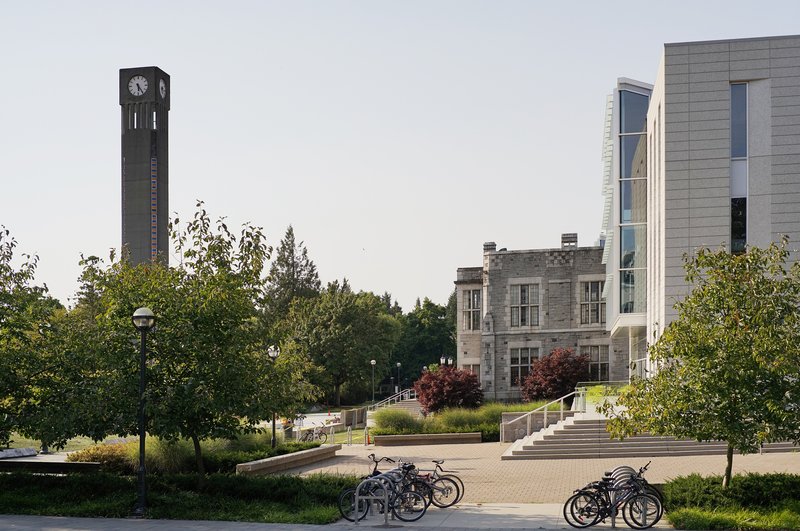
This image is believed to be available for open use. Credit: Dllu / Wikimedia Commons. If you are the rights holder and object, contact us and we'll remove it.
At Humber Polytechnic, one of Canada's largest publicly funded colleges, international enrollment for the 2025-26 academic year has fallen to about one-third of 2023-24 levels following federal immigration reforms, spokesperson Andrew Leopold told Reuters. The college faces a $40-million revenue shortfall, resulting in canceled programs and voluntary staff exit packages, Reuters reported.
Reuters also reported that Prime Minister Mark Carney's government has a $1.7 billion (US$1.19 billion) effort to attract top research talent to Canadian universities, and that Canada has committed more than $625 million to attract researchers through newly created research funding programs, with more recipients expected to be announced in early 2027, according to the Natural Sciences and Engineering Research Council of Canada. Reuters said the research council referred a request for comment to Canada's industry ministry, which did not respond.
Canada's immigration ministry told Reuters that new international student arrivals between January and July 2026 were down 80% compared with the same period in 2024. "With fewer opportunities available, we're being more selective," IRCC said in a statement quoted by Reuters. GROKsiNEWS.com did not independently obtain that statement.
GROKsiNEWS.com is not projecting whether Canada will meet the 150,000-a-year arrival target.
Sources
- Immigration, Refugees and Citizenship Canada, "Building a stronger Canada through a well-managed, predictable immigration system" (backgrounder), canada.ca
- Immigration, Refugees and Citizenship Canada, "Supplementary Information for the 2027-2029 Immigration Levels Plan," canada.ca
- Immigration, Refugees and Citizenship Canada, 2027–2029 Immigration Levels Plan release note, Nov. 5, 2026, canada.ca
- Immigration, Refugees and Citizenship Canada, "2026 provincial and territorial allocations under the international student cap," Nov. 25, 2025 (used only for the graduate-student attestation exemption)
- Reuters, Wa Lone, "Canada's foreign student restrictions test Carney's push to attract research talent," Nov. 25, 2026, as carried by The Globe and Mail: https://www.theglobeandmail.com/business/article-canadas-foreign-student-restrictions-test-carneys-push-to-attract/ and BNN Bloomberg