US, Mexico and Bolivia lose measles elimination status
The Pan American Health Organization said Tuesday that endemic transmission has been re-established in all three countries. As of Nov. 13, the Americas had 58,213 confirmed cases and 82 deaths. CDC said it is committed to regaining U.S. elimination status.
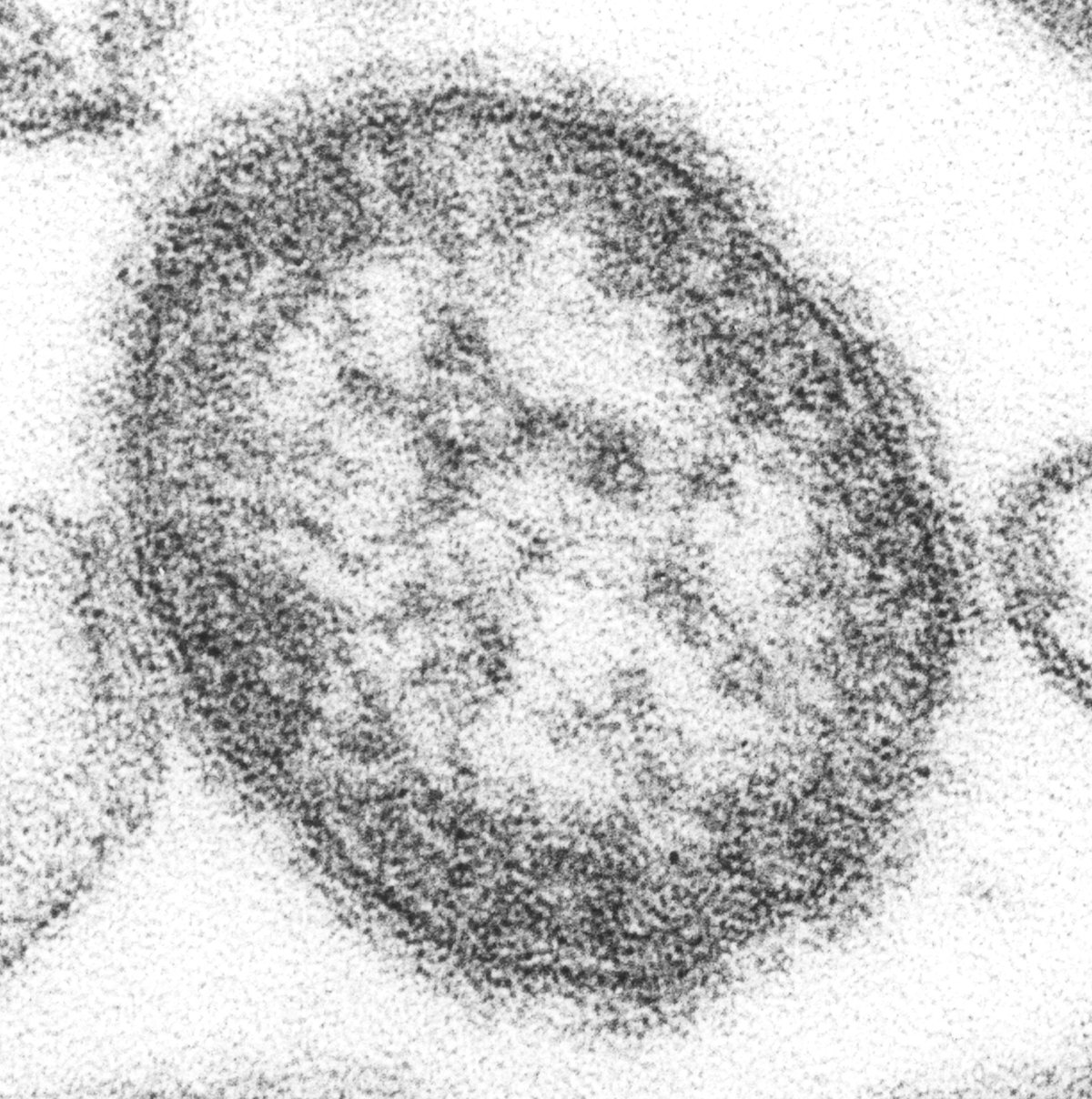
This image is believed to be available for open use. Credit: Cynthia S. Goldsmith, CDC. If you are the rights holder and object, contact us and we'll remove it.
As of 4:32 p.m. ET, Wednesday, Nov. 18, 2026
The United States, Mexico and Bolivia have lost their measles elimination status after endemic transmission was determined to have been re-established in all three countries, the Pan American Health Organization said on Tuesday, Nov. 17, 2026.
The determination followed a Nov. 10-13 meeting of PAHO's Measles, Rubella and Congenital Rubella Syndrome Elimination Regional Monitoring and Re-Verification Commission, whose assessment and recommendations were accepted by PAHO Director Dr. Jarbas Barbosa, the organization said. Under the commission's criteria, endemic transmission is considered re-established when the same measles virus genotype and lineage circulate uninterrupted for 12 months or more in a country.
As of Nov. 13, 2026, the region has reported 58,213 confirmed measles cases and 82 deaths, compared with 12,806 cases during the same period last year, PAHO said.
"Losing measles elimination status is much more than losing a public health designation. It means the virus has circulated for a prolonged period, putting families and communities at risk of preventable illness, hospitalization and death," Barbosa said in the announcement.
The Americas, the first region in the world to eliminate measles, regained that regional status in 2024 after interrupting endemic transmission in Venezuela and Brazil, PAHO said. The region then lost the status in November 2025 after sustained transmission in Canada, which PAHO called a major setback. Canada has since interrupted the chain of transmission associated with that outbreak and is working to regain elimination status, according to the announcement. Bolivia, Mexico and the United States are implementing measures to strengthen vaccination, surveillance and outbreak response, PAHO said.
PAHO said the resurgence across the region "reflects persistent gaps in population immunity, often concentrated in particular communities and geographic areas." It said barriers to health services, missed vaccinations, misinformation and vaccine hesitancy leave children, adolescents and adults vulnerable to infection. Sustaining at least 95% coverage with both doses of the measles vaccine in every community "remains essential to closing immunity gaps and preventing further transmission," the announcement said.
"This is a serious warning for our Region, but it is not an irreversible setback," Barbosa said. "We know how to prevent measles, and we know how to stop its transmission. With sustained commitment to vaccination, strong surveillance and effective outbreak response, the Americas can eliminate measles transmission once again."
The U.S. Centers for Disease Control and Prevention, in a joint statement posted on its newsroom Tuesday, said it and its partners "are committed to stopping measles outbreaks, protecting Americans, and regaining measles elimination status."
"The measles elimination designation is not what protects Americans. Vaccination does. We know where transmission is occurring and we've invested $100 million in state and local health departments to reach those communities. Losing a designation doesn't mean we abandon an evidence-based approach. It means we remain focused on stopping outbreaks," CDC Director Dr. Erica Schwartz said in the statement.
CDC said that since August it has provided approximately $100 million in additional funding nationwide to strengthen prevention and response to measles and other vaccine-preventable diseases through most of 2027. The statement also said MMR vaccination coverage among U.S. kindergartners fell from 95.2% in the 2019-2020 school year to 92.7% in 2023-2024.
Health and Human Services Secretary Robert F. Kennedy Jr. wrote in a post on X on Tuesday: "We will stop measles outbreaks, protect American families, and work to regain U.S. measles elimination status. I continue to recommend MMR vaccination as the most effective way to prevent measles."
Daniel Salas, PAHO's executive manager of immunizations, said the United States and the other countries that lost elimination status would be required to submit corrective action plans outlining how they would try to improve vaccination rates, BBC News reported on Nov. 17.
Sources
- PAHO, "PAHO urges countries to step up efforts to stop measles outbreaks and move towards elimination in the Americas," Nov. 17, 2026
- CDC, "Joint Statement: Loss of U.S. Measles Elimination Status," Nov. 17, 2026
- HHS Secretary Robert F. Kennedy Jr. (@SecKennedy), post on X, Nov. 17, 2026, 3:20 p.m. ET
- BBC News, Madeline Halpert, "US loses measles elimination status after 26 years amid record case numbers," Nov. 17, 2026