Bar-tailed godwit tracked 6,800 miles to Siberia, back
A bar-tailed godwit called Phil has been tracked from the Wash on England's east coast to the Taymyr Peninsula in central Siberia and back, a 6,800-mile journey, the Royal Society for the Protection of Birds said in a statement dated Nov. 17, 2026. A tracker weighing six grams was fitted to the bird in January by the Wash Wader Research Group, the RSPB said, and the bird is named in honor of Phil Ireland, who led that group for many years. The tracker showed that Phil traveled from the Wash to the Wadden Sea, along the coasts of the Netherlands, Germany and Denmark, in March, and then on to the Taymyr Peninsula in late May, the RSPB said. On the return, the bird crossed the Arctic Ocean to northern Norway, stopped on three small islands along the Norwegian coast, then went back through the Wadden Sea and arrived again at the Wash, the RSPB said. BBC News, in a report by environment correspondent Helen Briggs, gave the same distance as 6,800 miles (10,900 kilometers) and said the tracker was solar-powered. The RSPB said Phil has now joined other wading birds at the RSPB Snettisham reserve in Norfolk. The RSPB and the Wash Wader Research Group presented the track as evidence that migratory waders depend on a network of wetlands, not as a claim about the bird's motives or feelings.
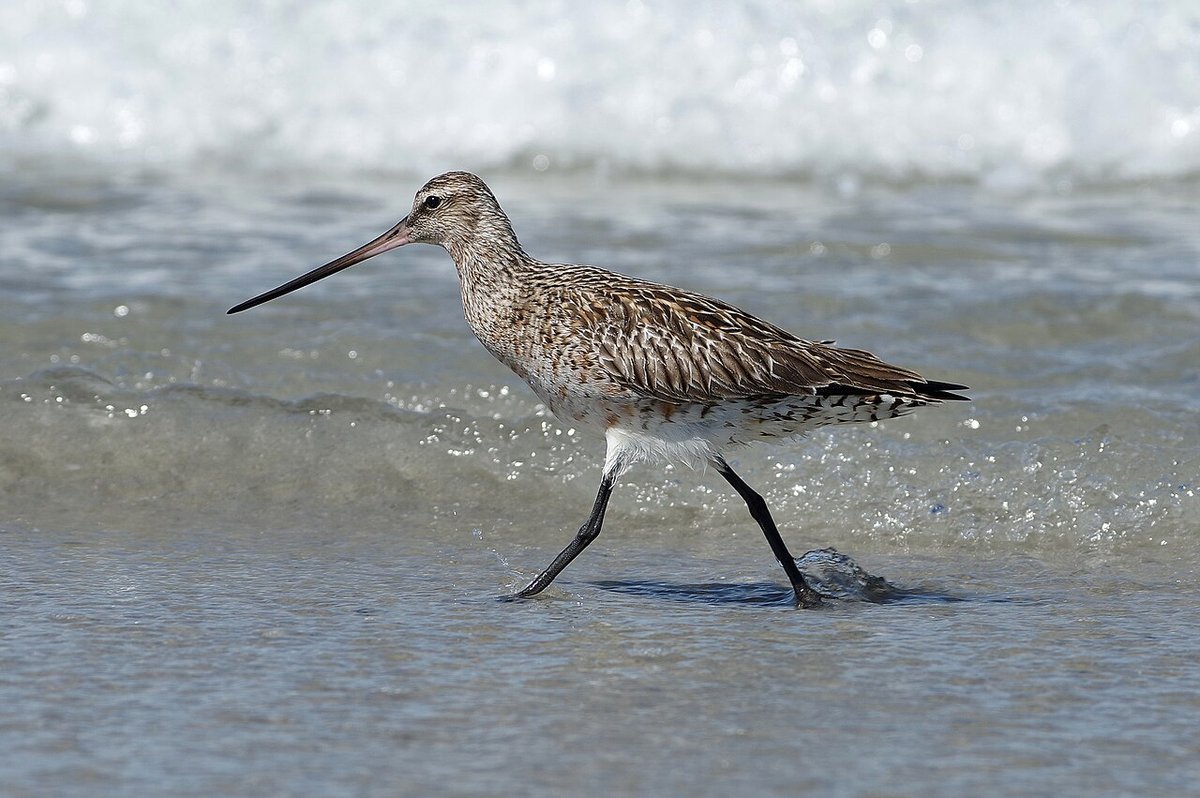
This image is believed to be available for open use. Credit: Hobbyfotowiki / Wikimedia Commons. If you are the rights holder and object, contact us and we'll remove it.
As of 11:12 a.m. ET, Friday, Nov. 27, 2026
A bar-tailed godwit called Phil has been tracked from the Wash, on the east coast of England, to breeding grounds on the Taymyr Peninsula in central Siberia and back again, a 6,800-mile journey, the Royal Society for the Protection of Birds said in a statement dated Nov. 17, 2026.
The Wash Wader Research Group fitted a tracker weighing six grams to the bird in January, the RSPB said. The bird is named in honor of Phil Ireland, who led that group for many years, the RSPB said. BBC News, in a report by environment correspondent Helen Briggs, also gave the distance as 6,800 miles (10,900 kilometers) and said the tracker was solar-powered. The RSPB's own statement did not describe the tracker as solar-powered.
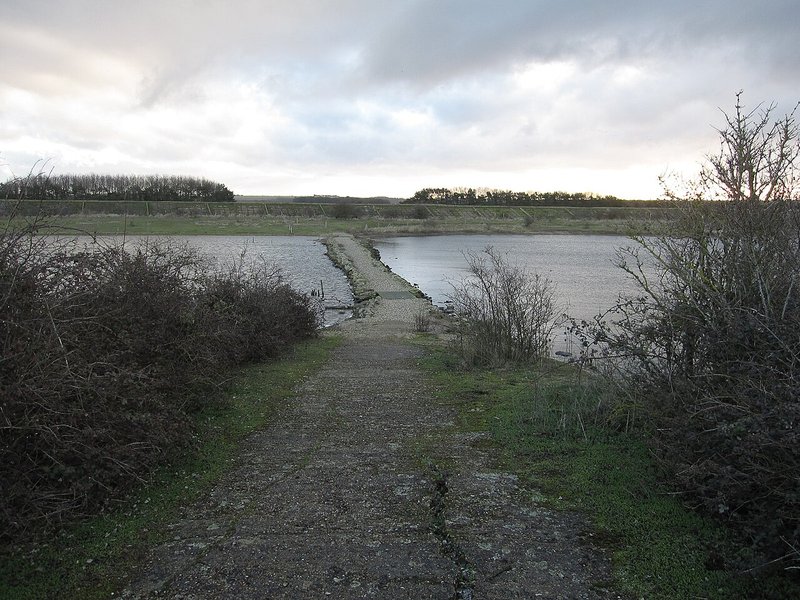
This image is believed to be available for open use. Credit: Hugh Venables, via geograph.org.uk and Wikimedia Commons (CC BY-SA 2.0) / Wikimedia Commons. If you are the rights holder and object, contact us and we'll remove it.
Until recently, the RSPB said, the exact routes taken by individual bar-tailed godwits that winter in the United Kingdom were largely unknown. The tracker showed that Phil traveled from the Wash to the Wadden Sea, which stretches along the coasts of the Netherlands, Germany and Denmark, in March, and then on to the Taymyr Peninsula in late May, the RSPB said. On the return journey, the bird crossed the Arctic Ocean to northern Norway, stopped on three small islands along the Norwegian coast, then returned through the Wadden Sea and arrived back at the Wash, the RSPB said.
The RSPB described the bar-tailed godwit as a medium-sized wading bird, a little bigger than a pigeon, with long legs and a long beak, and said the species is known for long-distance migrations. BBC News, reporting the same tracking, said one subspecies of bar-tailed godwit has made the longest known non-stop migration of any bird, flying 8,425 miles (13,559 kilometers) from Alaska to New Zealand. That figure is a species record reported by BBC News; it is not the distance recorded for Phil.
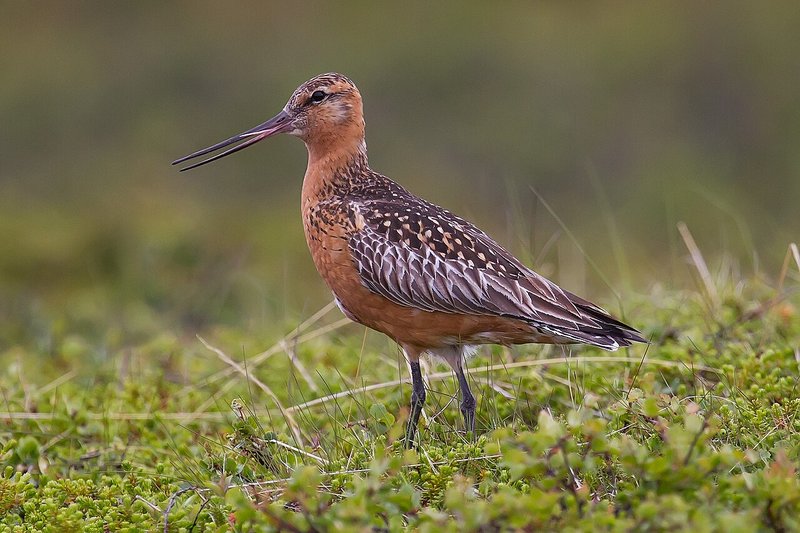
This image is believed to be available for open use. Credit: Andreas Trepte / Wikimedia Commons. If you are the rights holder and object, contact us and we'll remove it.
Jeff Kew, an RSPB coastal adviser, said: "It's amazing to think that a bird we tagged here on the Wash in January has travelled thousands of miles to Siberia and made it all the way back again." He also said: "By tracking Phil, we're reminded why protecting migratory birds needs to be a global effort. Many species cross borders and depend on a whole network of wetlands along the way. That's why it's so important to look after these special places."
Dr. Nigel Clark, of the Wash Wader Research Group, said: "The Wash is the UK's single most important coastal wetland for migratory waders and spectacular numbers can be seen here in autumn and winter. But tracking birds like Phil the Bar-tailed Godwit shows us how connected the Wash is with the rest of the flyway. This network of sites is more important than any single 'service station' alone."
The RSPB said wetlands along England's east coast, including the Wash, are important feeding and resting sites on the East Atlantic Flyway, and that the East Coast Wetlands between the Humber and the Thames have been put forward as a potential UNESCO World Heritage Site. The RSPB said Phil has now joined thousands of other wading birds at RSPB Snettisham in Norfolk, where, it said, birds gather on the highest tides. BBC News also said the bird would spend the winter at the Snettisham nature reserve.
| Stage | When, as the RSPB stated | What the tracker showed, as the RSPB stated |
|---|---|---|
| Tagging | January | A six-gram tracker was fitted on the Wash by the Wash Wader Research Group. The bird was named for Phil Ireland, a former leader of the group |
| Wash to the Wadden Sea | March | The bird traveled from the Wash to the Wadden Sea, along the coasts of the Netherlands, Germany and Denmark |
| Onward to Siberia | Late May | The bird continued to the Taymyr Peninsula in central Siberia |
| Return via Norway | After the breeding period, dates not further specified in the RSPB statement | The bird crossed the Arctic Ocean to northern Norway and stopped on three small islands along the Norwegian coast |
| Return via the Wadden Sea to the Wash | After those stops, dates not further specified in the RSPB statement | The bird returned through the Wadden Sea and arrived back at the Wash |
| After the return | As of the RSPB statement of Nov. 17, 2026 | The bird was at the RSPB Snettisham reserve in Norfolk |
| Round-trip distance | For the journey as a whole | 6,800 miles, as stated by the RSPB. BBC News gave the same figure as 6,800 miles (10,900 kilometers) |
Table: GROKsiNEWS.com. Source: Royal Society for the Protection of Birds statement, Nov. 17, 2026; BBC News report by Helen Briggs. Distances, dates and the species are given as those organizations stated them.
Sources
- Royal Society for the Protection of Birds, "There and back again: bird makes remarkable return to England's east coast," 17th Nov 2026
- BBC News, Helen Briggs, "Wading bird called Phil tracked in epic migration to Siberia and back," Nov. 19, 2026
- Wikimedia Commons, Hobbyfotowiki, bar-tailed godwit, Heligoland, May 11, 2019
- Wikimedia Commons upload file, same photograph
- Wikimedia Commons, Andreas Trepte, bar-tailed godwit, July 4, 2011
- Wikimedia Commons upload file, same photograph
- Wikimedia Commons, Hugh Venables, RSPB Snettisham reserve, Feb. 13, 2010
- Wikimedia Commons upload file, same photograph