Supreme Court to hear Alaska seaplane forfeiture case
The Supreme Court hears argument Tuesday on whether Alaska's forfeiture of a pilot's plane violates the Eighth Amendment's Excessive Fines Clause.
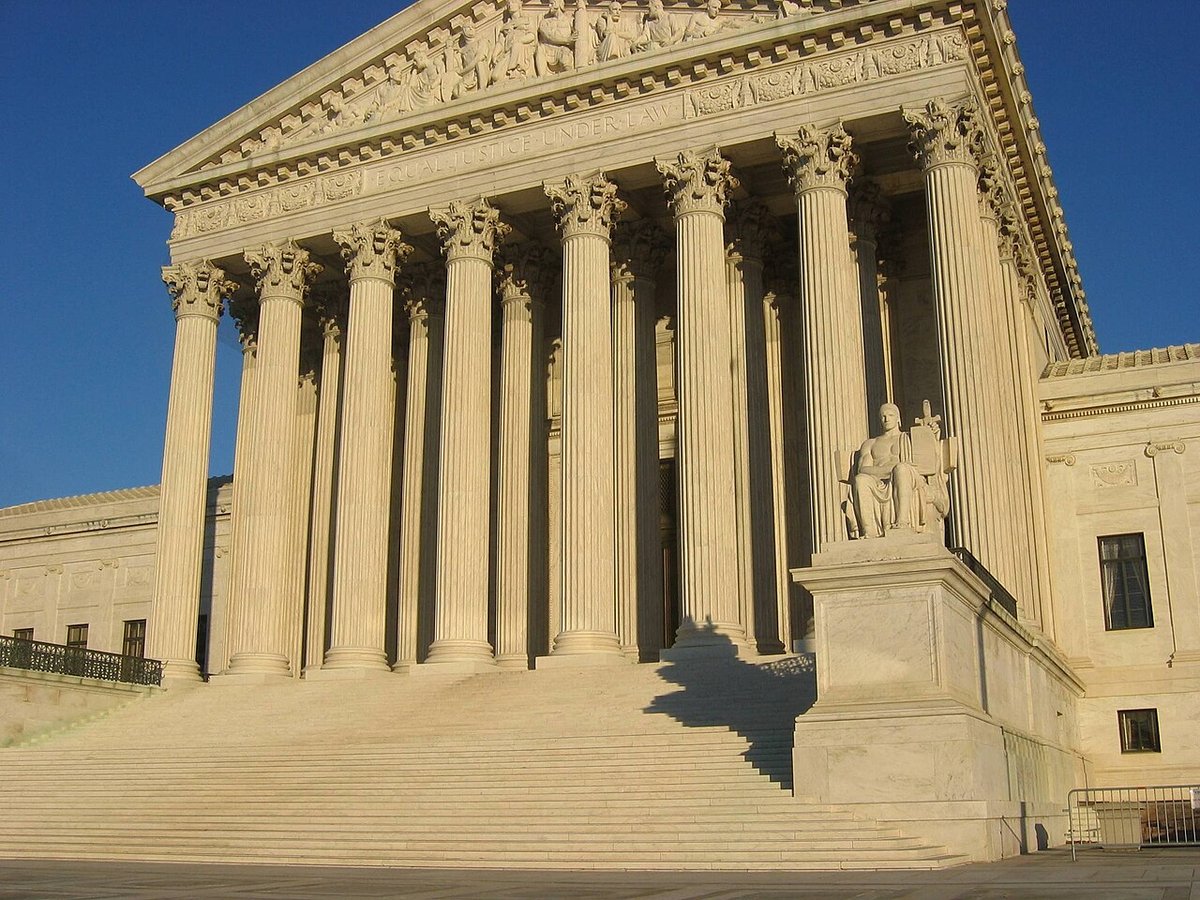
This image is believed to be available for open use. Credit: Duncan Lock / Wikimedia Commons. If you are the rights holder and object, contact us and we'll remove it.
As of 5:28 p.m. ET, Friday, Nov. 27, 2026
The Supreme Court is scheduled to hear argument Tuesday, Dec. 1, 2026, in Jouppi v. Alaska, a case asking whether Alaska's forfeiture of a pilot's airplane, after a conviction for transporting beer toward a village that prohibited alcohol, violates the Eighth Amendment's ban on excessive fines.
The docket number is 25-246. The court granted review on July 20, 2026. The December argument calendar lists the case as Tuesday's argument, and the hearing list allots one hour and states that the court convenes at 10 a.m. Samuel B. Gedge is listed as arguing for the petitioner, J. Michael Connolly for Alaska, and Vivek Suri, an assistant to the solicitor general, for the United States as amicus curiae.
The question presented, as the court issued it, asks "whether, in determining whether a fine contravenes the Excessive Fines Clause, courts may consider the gravity of the underlying offense purely in the abstract or should consider the gravity of the specific defendant's wrongdoing." That question quotes the court's 1998 decision in United States v. Bajakajian as saying that the amount of a fine "must bear some relationship to the gravity of the offense that it is designed to punish."
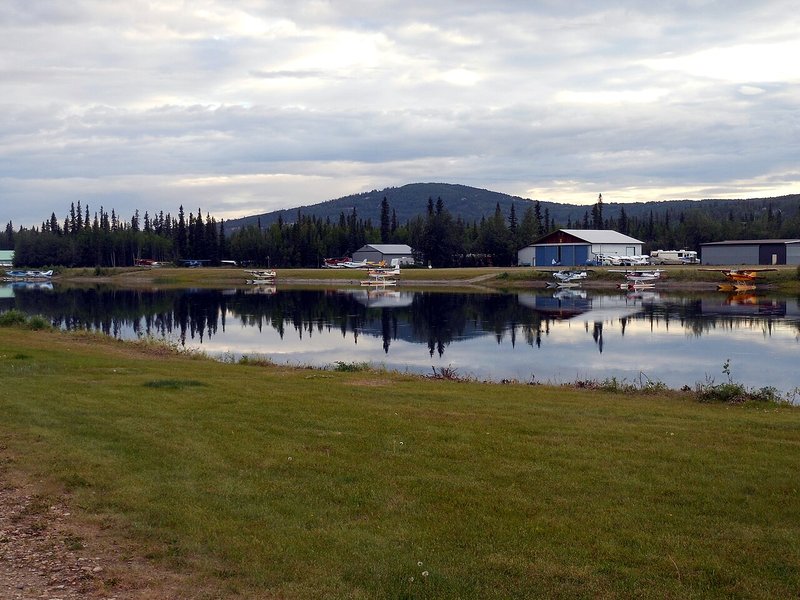
This image is believed to be available for open use. Credit: RadioKAOS / Wikimedia Commons. If you are the rights holder and object, contact us and we'll remove it.
The decision under review is the Alaska Supreme Court's April 18, 2025, opinion, 566 P.3d 943, Opinion No. 7762, written by Justice Pate. That court recites that Kenneth Jouppi owned an airplane he piloted for his air taxi company, KenAir LLC, and that, after a jury trial, Jouppi and KenAir were convicted of transporting beer by airplane from Fairbanks into the village of Beaver, a local-option community that had prohibited the importation, sale and possession of alcoholic beverages, which the opinion also calls a "dry village."
The Alaska opinion says evidence at trial showed that in April 2012, Jouppi loaded the equivalent of three cases of beer into his airplane for a customer who had chartered a flight from Fairbanks to Beaver. It says the jury heard conflicting evidence about how the beer was packed and how much of it would have been visible, including testimony that at least one six-pack in a grocery bag would have been in plain view, and a trooper's testimony that Jouppi had to be turning a blind eye because it would have been impossible not to see that alcohol was being loaded. Jouppi and his passenger both testified, the opinion says, that the cargo including the beer was packed in closed boxes except for loose twelve-packs of soda, and that Jouppi said he never opened the boxes. The jury was instructed to return a guilty verdict only if it found, beyond a reasonable doubt, that Jouppi or KenAir "knowingly sent, transported, or brought less than 12 gallons of malt beverage into the village of Beaver" and that Beaver was a dry village, and that a party acts "knowingly" when any failure to possess actual knowledge was due to the party's "deliberate ignorance."
The Alaska Supreme Court recites that the trial court sentenced Jouppi to 180 days in jail with 177 suspended, a $3,000 fine with $1,500 suspended, and three years of probation, and sentenced KenAir to a $10,000 fine with $8,500 suspended and three years of probation. After later proceedings, the trial court found that Jouppi, rather than his company, owned the airplane and that the airplane was worth $95,000, the opinion says, and observed that this value was "nine and a half times the maximum fine" of $10,000 that could have been imposed on Jouppi. The trial court also stated that the evidence established "that there were approximately seventy two beers on the airplane" and found that Jouppi "was 'willfully blind' with respect to six beers that were clearly visible inside a plastic grocery bag."
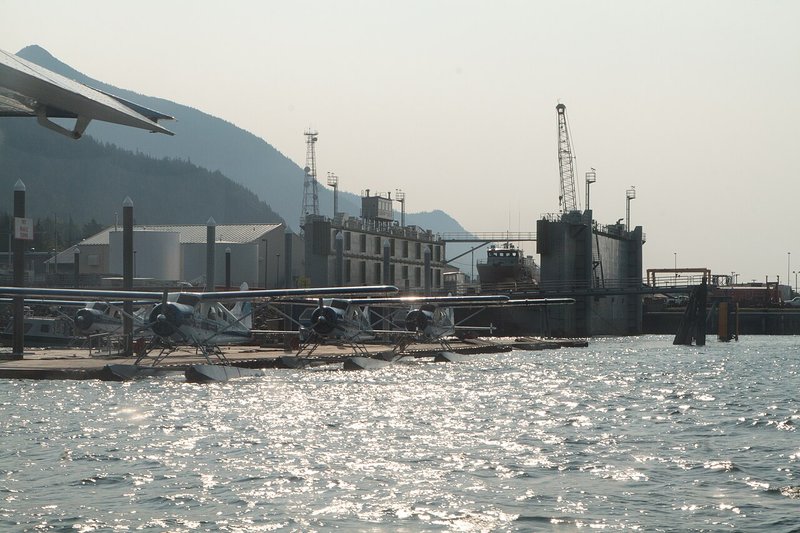
This image is believed to be available for open use. Credit: Alan Wu / Wikimedia Commons. If you are the rights holder and object, contact us and we'll remove it.
The question presented issued by the U.S. Supreme Court characterizes the Alaska decision as having upheld the forfeiture "because, the court reasoned, petitioner knew that one of his passenger's grocery bags contained a sixpack of Budweiser." The Alaska opinion itself recites the trial court's findings about approximately 72 beers and willful blindness as to six visible beers. In briefing described by SCOTUSblog, the parties dispute how those facts should be framed.
The Alaska opinion also says the trial court, on reconsideration of its original judgment, found that the statute did not authorize forfeiture because the state had seized the alcohol before Jouppi left Fairbanks, so he had not actually imported beer into a dry village. The Alaska Court of Appeals later reversed that statutory ruling, holding that the statute required forfeiture because the airplane was used to facilitate the transportation of alcohol, even though the alcohol was not actually delivered, the Alaska Supreme Court recites.
On remand, the trial court concluded that forfeiture would be an unconstitutionally excessive fine. The Court of Appeals vacated that ruling and remanded for further fact-finding under Bajakajian. The Alaska Supreme Court then held, as a matter of law, "that the owner of the airplane failed to establish that forfeiture would be unconstitutionally excessive," and that application of the Bajakajian factors "demonstrates that the forfeiture is not grossly disproportional to the gravity of the harm caused by the offense."
| Step | What the record shows |
|---|---|
| April 2012 | Jouppi was loading a chartered flight from Fairbanks to Beaver when the alcohol was seized before the plane left Fairbanks, the Alaska Supreme Court recites |
| District Court, Fourth Judicial District, Fairbanks, No. 4FA-12-03228 CR | Jury conviction; original judgment Dec. 18, 2013; later trial-court orders on remand, including May 3, 2018 |
| Alaska Court of Appeals, Jouppi I, 397 P.3d 1026 (2017) | Reversed the trial court's statutory ruling and held that the statute required forfeiture of the airplane |
| Alaska Court of Appeals, Jouppi II, 519 P.3d 653 (Sept. 23, 2022) | Vacated the trial court's conclusion that forfeiture was an excessive fine and remanded for further fact-finding |
| Alaska Supreme Court, Opinion No. 7762, 566 P.3d 943 (April 18, 2025), Nos. S-18598 and S-18637 | Held as a matter of law that forfeiture was not unconstitutionally excessive |
| U.S. Supreme Court, docket 25-246 | Petition filed Aug. 29, 2025; review granted July 20, 2026; argument set for Tuesday, Dec. 1, 2026 |
Table: GROKsiNEWS.com. Source: Supreme Court docket 25-246 and hearing list for the session beginning Nov. 30, 2026; Alaska Supreme Court, Jouppi v. State, Opinion No. 7762 (April 18, 2025).
Sources
- Supreme Court docket, Kenneth J. Jouppi, Petitioner v. Alaska, No. 25-246
- Supreme Court, Questions Presented, No. 25-246
- Petition for a writ of certiorari, Jouppi v. Alaska, filed Aug. 29, 2025
- Alaska Supreme Court, Kenneth J. Jouppi v. State of Alaska, Opinion No. 7762, April 18, 2025
- Supreme Court hearing list, session beginning Nov. 30, 2026
- Supreme Court monthly argument calendar, December 2026
- SCOTUSblog, Amy Howe, "Court to determine if Alaska's seizure of pilot's plane for carrying beer violates the Eighth Amendment," Nov. 27, 2026
- Wikimedia Commons, US Supreme Court Building.jpg
- Wikimedia Commons, Chena Marina Airport outside of Fairbanks, Alaska.jpg
- Wikimedia Commons, Taquan Air seaplanes at Ketchikan Harbor Seaplane Base.jpg
- Related live article, Supreme Court AR-15 argument Dec. 2