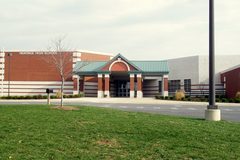
Lilly Endowment awards AI grants to Indiana colleges
Lilly Endowment Inc. said Nov. 23, 2026, that it has approved 35 implementation grants, totaling $291,710,000, through its Artificial Intelligence in Higher Education initiative to help Indiana colleges and universities design and carry out their own approaches to using artificial intelligence. The grants range from $2.5 million to $25 million and are based on each institution's enrollment, the Endowment said. Ball State University said Nov. 25 that it had received $12 million. Indiana State University and Marian University each said they had received $8.5 million, matching the amounts listed for those schools on the Endowment's grants list. The Endowment has allocated $500 million in all for the initiative, including earlier planning grants, these implementation grants, and additional collaboration grants it said it expects to approve in December.
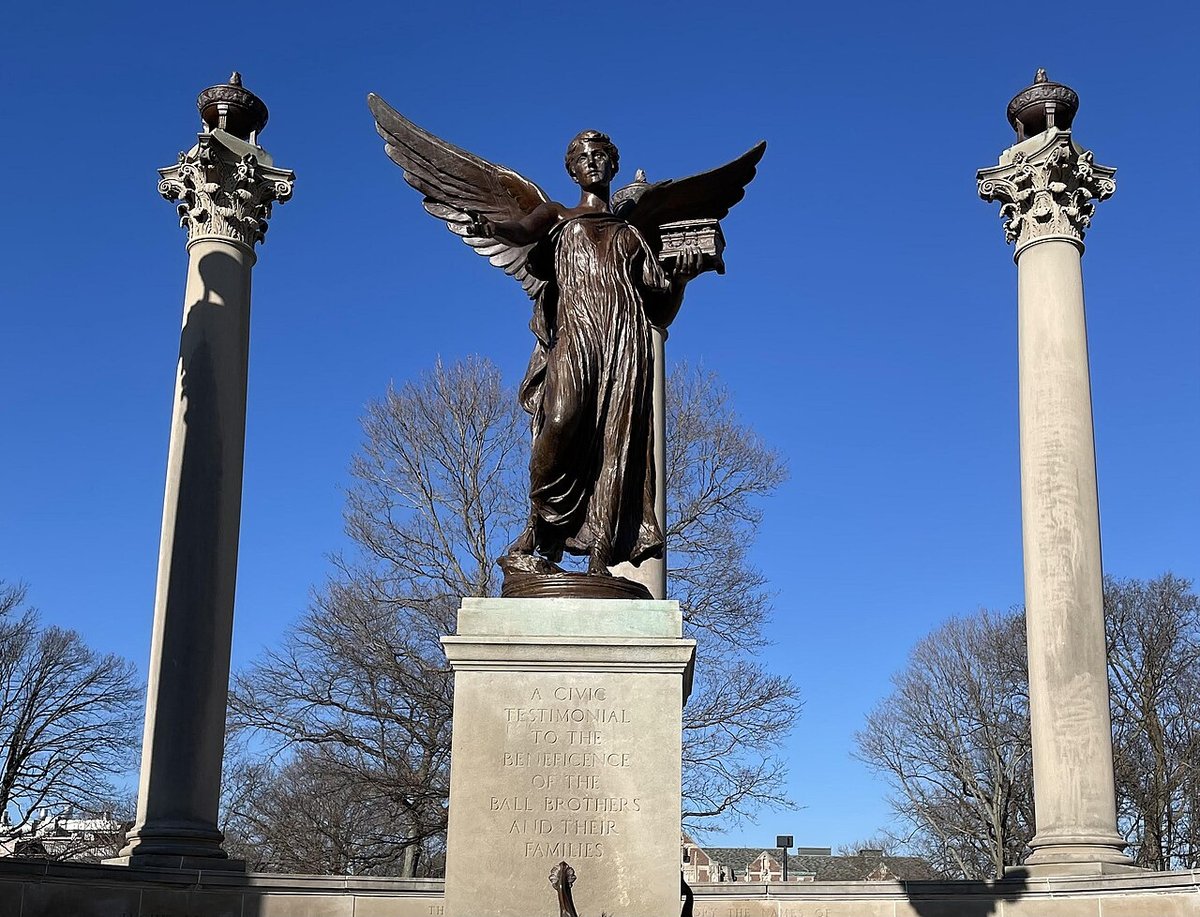
This image is believed to be available for open use. Credit: TheProphetIcculus / Wikimedia Commons. If you are the rights holder and object, contact us and we'll remove it.
As of 8:57 a.m. ET, Thursday, Nov. 26, 2026
Lilly Endowment Inc. has approved 35 implementation grants, totaling $291,710,000, to help Indiana colleges and universities develop and carry out approaches for using artificial intelligence, the Indianapolis-based private foundation said in a Nov. 23, 2026, announcement.
The grants are being made through the Endowment's Artificial Intelligence in Higher Education initiative, which it said is intended to help ensure that students, faculty and staff are "well-equipped to learn, work and live in a world increasingly influenced by AI." The grants range from $2.5 million to $25 million and are based on each college or university's student enrollment, the Endowment said. Its published list names all 35 recipients.
"The rapid rise and growing ubiquity of AI may be one of the most significant challenges higher education institutions have ever faced," Ted Maple, the Endowment's vice president for education, said in the announcement. Faculty and staff are concerned that AI could "impede original and independent thinking and threaten social connections," he said, while colleges have also recognized that it may offer ways to enhance teaching, learning, student services and research.
In December 2025, the Endowment awarded planning grants to each of the 35 institutions to help them assess their needs and prepare implementation proposals, the announcement said. The new grants will support a range of projects, the Endowment said, including faculty and staff development, technology infrastructure, AI policies and governance, ethical frameworks, research on AI's social and economic effects, and changes to curricula and career programs, in some cases after consultation with employers.
The Endowment has allocated a total of $500 million for the initiative, including the planning grants, the implementation grants announced this week, and additional grants it said it expects to approve in December to support large-scale collaborations among two or more Indiana colleges and universities.
| Institution | Amount, as stated | What the school said the grant will support | Source of the figure |
|---|---|---|---|
| Ball State University, Muncie | $12 million | A three-year plan, from 2027 through 2029, including a digital program called AI Navigator, course redesign, and an AI Workforce Ready Certification, with a goal of about 5,000 students earning the certification by 2029, the university said. | Ball State University, Nov. 25, 2026; Lilly Endowment list: $12,000,000 to the Ball State University Foundation |
| Indiana State University, Terre Haute | $8.5 million | A coordinated, university-wide approach to AI in the curriculum, student support and operations, the university said. | Indiana State University, Nov. 25, 2026; Lilly Endowment list: $8,500,000 to the Indiana State University Foundation |
| Marian University, Indianapolis | $8.5 million | A university-wide initiative called Knight Connect, focused on workforce-aligned AI literacy, student success and early intervention, and responsible AI use and data practices, the university said. | Marian University, Nov. 25, 2026; Lilly Endowment list: $8,500,000 to Marian University |
| Program total, 35 grants | $291,710,000 | Implementation grants across Indiana colleges and universities, with awards ranging from $2.5 million to $25 million based on enrollment, the Endowment said. Western Governors University, listed in Salt Lake City, Utah, is the only recipient the list places outside Indiana. | Lilly Endowment announcement and grants list, Nov. 23, 2026 |
| Initiative allocation | $500 million | The Endowment said this total covers planning grants, the implementation grants, and collaboration grants it expects to approve in December. | Lilly Endowment announcement, Nov. 23, 2026 |
Table: GROKsiNEWS.com.
Each school's grant amount in this table is taken from that school's own release and matches the Endowment's list.
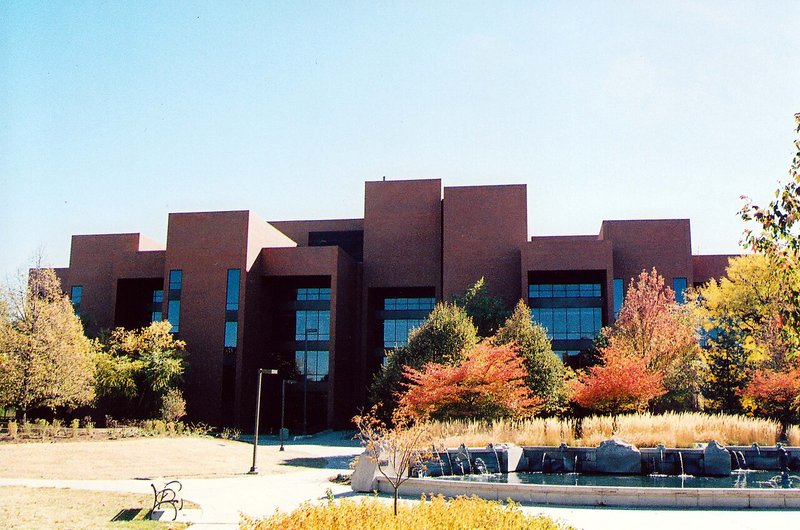
This image is believed to be available for open use. Credit: Daniel Hartwig / Wikimedia Commons. If you are the rights holder and object, contact us and we'll remove it.
Ball State University said on Nov. 25 that it had received a $12 million grant for a three-year plan, from 2027 through 2029, focused on AI literacy, academic innovation, workforce readiness, ethical decision-making and student success. The amount matches the $12,000,000 listed for the Ball State University Foundation on the Endowment's grants list.
President Geoffrey S. Mearns said the grant would help the university prepare students "for fulfilling careers and meaningful lives in a rapidly changing world" and help them "develop the knowledge and judgment to use these technologies effectively and responsibly." Provost and Executive Vice President for Academic Affairs Anand Marri, who the university said will be the initiative's principal investigator, said the aim is for students in every academic discipline to understand AI, evaluate its outputs and apply it responsibly.
A central piece, the university said, will be AI Navigator, a digital learning program on AI's capabilities and limits, critical evaluation of AI-generated information, and responsible use, planned for university-wide availability by fall 2027, with a goal that at least 75 percent of students complete the training by the end of the three-year grant period. The university also said the grant would support redesign of at least 20 percent of undergraduate courses to incorporate AI literacy, and that students would have opportunities to earn an AI Workforce Ready Certification, with a goal of approximately 5,000 students earning it by 2029. The plan builds on a planning phase that included input from students, alumni, industry leaders, community partners, and more than 800 faculty and staff members, the university said.
Indiana State University said on Nov. 25 that it had been awarded an $8.5 million grant, matching the $8,500,000 listed for the Indiana State University Foundation. President Mike Godard said the grant would "allow us to accelerate and enhance our work on artificial intelligence across our campus and beyond." The university said it would put in place a coordinated, institution-wide approach to AI across the curriculum, student support and operations.

This image is believed to be available for open use. Credit: Tony Campbell / Wikimedia Commons. If you are the rights holder and object, contact us and we'll remove it.
Marian University said on Nov. 25 that it had received an $8.5 million grant to establish Knight Connect, a university-wide initiative to integrate AI into teaching, academic programs and operations. The amount matches the $8,500,000 listed for Marian University. President Daniel J. Elsener said, "Artificial intelligence is changing how people learn, work, and solve problems, but technology alone cannot replace human judgment." He said the investment would help Marian prepare students to use AI responsibly while developing "the critical thinking, creativity, and ethical foundation they need to succeed," guided by the university's Catholic and Franciscan values.
Chief Academic Officer Binh Q. Tran, who the university said is leading the initiative, said the grant would expand students' opportunities to develop AI skills, integrate AI across the curriculum, and prepare graduates for an AI-enabled workforce. Marian said Knight Connect would focus on three priorities: workforce-aligned AI literacy and curriculum innovation; student success and early intervention; and responsible AI use and business intelligence, including data infrastructure and governance.
The Endowment, founded in 1937 by J.K. Lilly and his sons Eli and J.K. Jr. through gifts of stock in Eli Lilly and Company, said it is a separate entity from the company, with its own board, staff and location, and that it maintains a special commitment to Indianapolis and Indiana.
Sources
- Lilly Endowment Inc., "Grants will help Indiana colleges and universities meet the challenges and opportunities posed by artificial intelligence," Nov. 23, 2026, contact Judith Cebula
- Lilly Endowment Inc., "Artificial Intelligence in Higher Education, November 2026 Grants List," amounts totaling $291,710,000
- Ball State University, "Lilly Endowment Awards $12 Million Grant to Advance AI Education at Ball State University," Nov. 25, 2026
- Indiana State University, "Indiana State University Receives $8.5 Million Lilly Endowment Grant to Lead on Artificial Intelligence," Nov. 25, 2026
- Marian University, Chris Proffitt, "Marian University Receives $8.5 Million Lilly Endowment Grant to Advance Artificial Intelligence in Education," Nov. 25, 2026
- Wikimedia Commons, Beneficence statue, Ball State University, March 29, 2022
- Wikimedia Commons, Bracken Library, Ball State University, Sept. 19, 2009
- Wikimedia Commons, Indiana State University Dede Plaza, Oct. 28, 2010