FCC approves SpaceX plan for up to 1 million satellites
The Federal Communications Commission on Wednesday, Nov. 25, 2026, authorized SpaceX to deploy and operate Starmind, a constellation of up to 1 million satellites designed to work as data centers in orbit. The Space Bureau's order sets deployment deadlines, defers part of SpaceX's request and denies petitions from Amazon's satellite unit, Viasat and the American Astronomical Society.
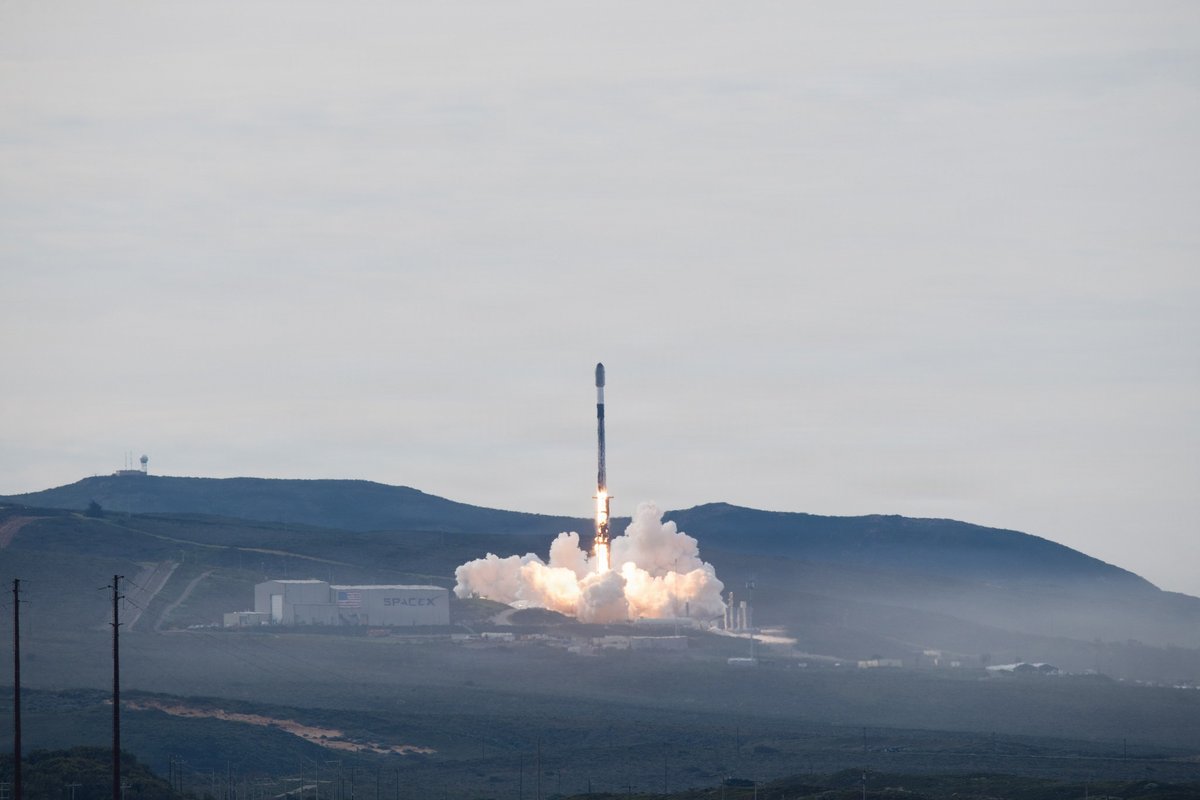
This image is believed to be available for open use. Credit: U.S. Space Force photo by 2nd Lt. Andrew Taller / Wikimedia Commons. If you are the rights holder and object, contact us and we'll remove it.
As of 3:24 p.m. ET, Wednesday, Nov. 25, 2026
The Federal Communications Commission on Wednesday authorized SpaceX to deploy and operate a constellation of up to 1 million satellites designed to work as data centers in space, a system the company calls Starmind.
"Today, in a historic first, the FCC approved SpaceX's request for 1 million satellites (orbital compute modules) to create data centers in space," FCC Chairman Brendan Carr said in a post on X at 11:09 a.m. ET. "The Starmind & competitor constellations will use solar power to extend America's lead in Super Intelligence."
The approval came in a memorandum opinion and order and authorization, DA 26-1273, adopted and released Nov. 25 and signed by Courtney Reinhard, chief of the FCC's Space Bureau. The order grants SpaceX's application, which it says SpaceX filed on Jan. 30, 2026, in part and defers it in part, with conditions. The bureau said it found that granting the application "will serve the public interest by permitting SpaceX to pioneer emergent technology that advances American leadership in space and artificial intelligence."
In a longer statement in the FCC's news release, Carr said: "Compute campuses or data centers are essential to sustaining America's leadership in SI. By moving compute capacity beyond Earth, SpaceX and the many competitors working on their own orbital data centers are meeting the moment." The release said the FCC "is continuing to review additional orbital data center proposals and intends to issue decisions on each expeditiously according to the agency's regular procedures." The release also said, "More fundamentally, it promises to bring the human race closer to a Kardashev II civilization—one that can harness the full power of the sun."

This image is believed to be available for open use. Credit: Federal Communications Commission / Wikimedia Commons. If you are the rights holder and object, contact us and we'll remove it.
What the order allows
According to the order, the license covers 1,000,000 satellites in orbital shells, each spanning 50 kilometers, at altitudes from 500 to 1,002 kilometers (about 310 to 623 miles), in 30-degree and sun-synchronous inclinations. The FCC licenses radio use, so what the order formally grants is radio spectrum for backup and emergency telemetry, tracking and command for the constellation. It allows Ka-band links at 18.8–19.3 GHz (space to Earth) and 28.6–29.1 GHz (Earth to space), and only on an unprotected, non-interference basis. "Starmind will rely on optical links for communications," the order says.
The authorization becomes "null and void" if SpaceX misses these deployment deadlines, according to the order:
| Deadline | What SpaceX must have deployed and operating in its assigned orbits |
|---|---|
| Nov. 25, 2033 | One authorized satellite |
| Nov. 25, 2035 | 10% of the authorized maximum (100,000 satellites, as Reuters put it) |
| Nov. 25, 2038 | 50% of the authorized maximum |
| Nov. 25, 2040 | The remaining satellites needed to complete the constellation |
Table: GROKsiNEWS.com. Source: Federal Communications Commission, Space Bureau, DA 26-1273, Nov. 25, 2026. The 100,000 figure is Reuters' calculation from the order's 10% milestone.
The 15-year license term begins when SpaceX certifies to the FCC that the first Starmind satellite is in orbit and operating in line with the authorization, the order says.
The bureau found that SpaceX's orbital debris plan for Starmind satellites operating below 600 kilometers complies with FCC rules. It deferred SpaceX's request for a waiver to dispose of satellites operating above 600 kilometers into "Earth disposal orbits or heliocentric orbits" rather than by reentering the atmosphere, "because SpaceX has not provided sufficient information" to show that the alternative methods comply. Before deploying any satellite that will not be disposed of by atmospheric reentry, SpaceX must file to modify the authorization, and it must file a final debris plan before deploying any Starmind satellite above 600 kilometers, the order says.
The order also requires SpaceX to report twice a year how many of its satellites communicated with earth stations using the authorized Ka-band frequencies, and to stop any operation that an affected U.S. federal system documents as causing harmful interference until the issue is resolved.
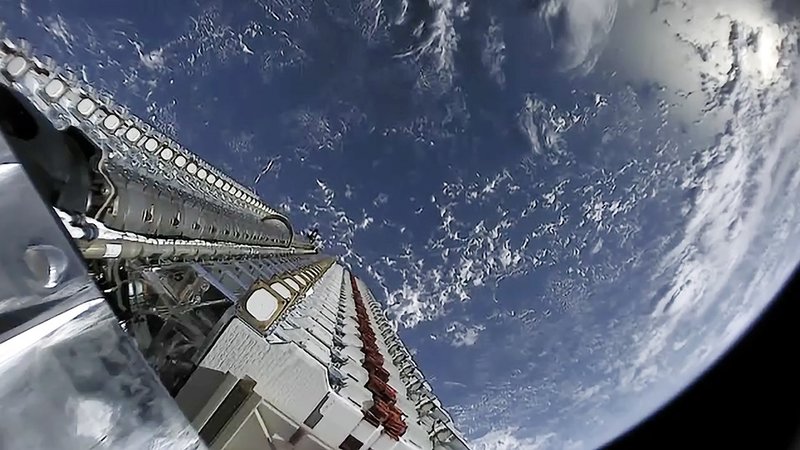
This image is believed to be available for open use. Credit: Official SpaceX Photos / Wikimedia Commons. If you are the rights holder and object, contact us and we'll remove it.
Objections denied
The order denied petitions to deny filed by Viasat Inc., Kuiper Systems LLC and the American Astronomical Society. Amazon's rival satellite unit, Leo, and others had argued that SpaceX was unlikely to deploy all the satellites and that doing so could take centuries, Reuters reported. Carr rejected that criticism in March, Reuters said.
The astronomical society argued that the system's waste heat, combined with the number of satellites, could raise the infrared background of the sky and threaten research, the order says. The bureau said concerns about optical astronomy were "sufficiently addressed" by SpaceX's commitment to coordinate with the National Science Foundation. It said concerns that "do not originate from radiofrequency operations" fall outside its review, and that it would not require further environmental review under the National Environmental Policy Act, citing an FCC order from October.
How big is 1 million?
It was unclear whether SpaceX would put 1 million satellites in space, where only 17,000 satellites exist now, Reuters reported. Satellite operators sometimes request approval for more satellites than they intend to deploy, to give themselves design flexibility, the news agency said. SpaceX sought approval for 42,000 Starlink satellites before it began deploying that system, which now has just over 11,000 satellites in space, according to Reuters.
| Figure | Number | Source |
|---|---|---|
| Starmind satellites authorized | Up to 1,000,000 | FCC order DA 26-1273 |
| Satellites in space today, all operators | 17,000 | Reuters |
| Starlink satellites SpaceX first sought approval for | 42,000 | Reuters |
| Starlink satellites in space today | Just over 11,000 | Reuters |
Table: GROKsiNEWS.com. Reuters figures are as reported by Reuters on Nov. 25, 2026.
"By directly harnessing near-constant solar power with little operating or maintenance costs, these satellites will achieve transformative cost and energy efficiency while significantly reducing the environmental impact associated with terrestrial data centers," SpaceX told the FCC, Reuters reported.
SpaceX's plan relies heavily on lower launch costs from Starship, the company's next-generation reusable rocket under development, according to Reuters.
Sources
- Federal Communications Commission, Space Bureau, "Space Exploration Holdings, LLC Application for Launch and Operating Authority for the SpaceX Orbital Data Center System," Memorandum Opinion and Order and Authorization, DA 26-1273, adopted and released Nov. 25, 2026 (PDF: https://docs.fcc.gov/public/attachments/DA-26-1273A1.pdf; FCC document page: https://www.fcc.gov/document/fcc-authorizes-1-million-satellites-data-centers-space)
- Brendan Carr, FCC chairman, official X account (@BrendanCarrFCC), Nov. 25, 2026, 11:09 a.m. ET
- Reuters, David Shepardson, "US authorizes SpaceX to deploy 1 million satellites for data centers in space," Nov. 25, 2026, as carried in full by Investing.com
- Federal Communications Commission, news release, "FCC Authorizes 1 Million Satellites for Data Centers in Space," Nov. 25, 2026 (text: https://docs.fcc.gov/public/attachments/DOC-427572A1.txt)